
Hair Loss Treatments For Women - The Hair Loss Clinic UK
Female Pattern Hair Loss (FPHL) is a common yet often distressing condition that affects millions of women.
Unlike sudden hair shedding, Female Pattern Hair Loss usually develops gradually, causing diffuse thinning across the scalp, widening of the parting, and reduced hair density over time.
At The Hair Loss Clinic, our experienced trichologist and his team provide advanced, medical-grade topical treatments to help women experiencing Female Pattern Hair Loss regain confidence and improve hair health.
Our personalised treatment plans are designed to reduce shedding, support regrowth, and slow the progression of thinning hair.
Key Takeaways:
✔ We offer scientifically proven hair loss treatments for women
✔ Our consultant trichologist will assess your needs
✔ Genetic testing can help to identify which treatments you will best respond to
✔ Start your hair recovery plan by completing our online hair questionnaire
Understanding Female Pattern Hair Loss
Female Pattern Hair Loss, also known as Female Androgenetic Alopecia, is influenced by genetics and hormones. While women typically do not experience complete baldness in the same way men often do, thinning can still become significant and emotionally challenging.
Common signs include:
- Widening of the centre parting
- Diffuse thinning throughout the scalp
- Reduced hair volume and density
- Increased scalp visibility
- Excessive shedding during washing or brushing
Hair loss may develop gradually over several years or become more noticeable during periods of hormonal change.
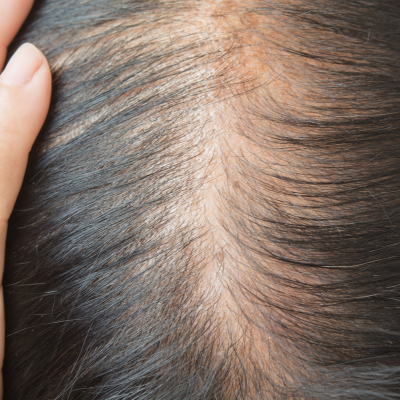
Hormonal Hair Loss in Women
Hormonal fluctuations are one of the leading triggers for Female Pattern Hair Loss and increased shedding.
Post-Partum Hair Loss & Pregnancy Hair Loss: Many women experience thicker hair during pregnancy due to elevated hormone levels. However, after childbirth, hormone levels drop rapidly, causing increased shedding known as post-partum hair loss. This temporary shedding can feel alarming, but professional support and targeted treatments may help encourage healthy regrowth and support scalp recovery.
Menopausal Hair Loss: Menopause can significantly impact hair health. Falling oestrogen levels may allow DHT to affect hair follicles more aggressively, leading to increased thinning, loss of density, and changes in hair texture. Women often notice thinning around the crown and widening of the parting during this stage of life.
PCOS & Hair Thinning: Polycystic Ovary Syndrome (PCOS) can contribute to hair thinning due to increased androgen levels. Women with PCOS may experience scalp hair loss alongside symptoms such as excess facial hair, acne, or irregular periods. Managing hormonally driven hair loss often requires a targeted and personalised approach.
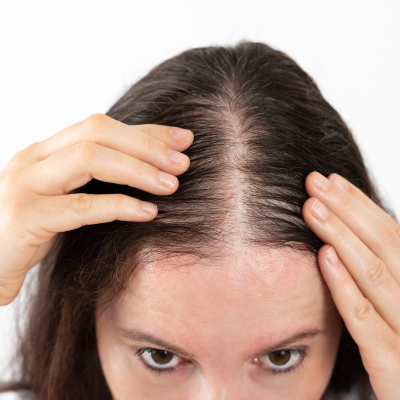
Pharmaceutical Grade Hair Loss Treatments
At The Hair Loss Clinic, we offer pharmaceutical-grade topical treatments designed to support healthier hair growth and reduce excessive shedding. Our trichologist may recommend clinically proven solutions including:
- Minoxidil: Minoxidil helps stimulate hair follicles, improve circulation, and extend the hair growth cycle. It is one of the most widely used treatments for Female Pattern Hair Loss and may help improve hair density over time.
- Finasteride & Dutasteride: DHT-blocking treatments such as Finasteride or Dutasteride may be recommended in certain cases to help slow hormonally influenced hair loss and reduce follicular miniaturisation.
- Spironolactone: Spironolactone is often used for hormonally driven hair loss, particularly in women with PCOS or menopausal hair thinning. It helps reduce the effects of androgens on the hair follicles.
- Melatonin: Melatonin may help support the hair growth cycle and protect follicles from oxidative stress, helping improve overall scalp and hair health.
- Tretinoin: Tretinoin is sometimes combined with Minoxidil to help improve absorption and enhance the effectiveness of topical hair loss treatments.
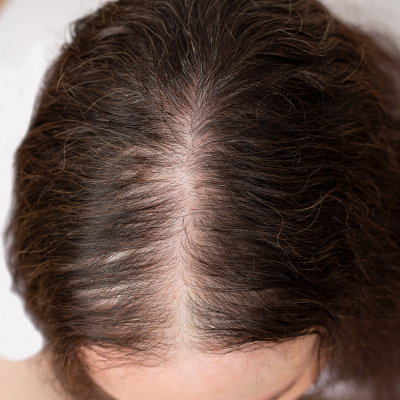
Personalised Treatment Plans & Genetic Testing
Choosing the right products can make a significant difference when managing hair loss or hair thinning.
Every woman’s hair loss journey is unique so we create tailored treatment plans based on your individual needs and concerns.
In some cases, we may recommend you use the Fagron TrichoTest™ - an at-home genetic testing kit that requires a saliva sample. The results help us identify which treatments may be most suitable for your genetic profile.
By understanding how your body may respond to certain ingredients and medications, we remove the 'trial and error' you may have experienced elsewhere because we can better identify which pharmaceutical ingredients you will best respond to.
Take our quick questionnaire below to see whether genetic testing is right for you.

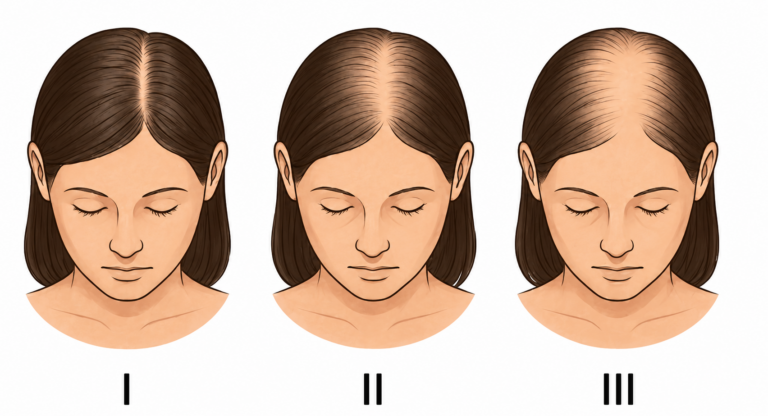
What Is The Ludwig Scale?
The Ludwig Scale is a widely recognised classification system used to measure and assess Female Pattern Hair Loss. Similar to the Norwood Scale used for men, the Ludwig Scale helps trichologists identify the severity and progression of hair thinning in women.
The scale focuses primarily on hair density reduction around the centre parting and crown area, which are common signs of Female Pattern Hair Loss. It ranges from very mild thinning to more advanced hair loss, allowing specialists to monitor changes over time and recommend suitable treatment options.
Using this scale can help create a clearer picture of how hair loss is progressing and whether treatments are delivering positive results. At The Hair Loss Clinic, our trichologist and his team tailor hair loss treatments to individuals to help with your long-term hair restoration goals.
FAQs About Female Pattern Hair Loss
What is Female Pattern Hair Loss?
«Female Pattern Hair Loss, also known as Female Androgenetic Alopecia, is a common form of hair thinning in women. It usually develops gradually and can cause diffuse thinning, widening of the parting, and reduced hair density over time.
What causes Female Pattern Hair Loss?
«Female Pattern Hair Loss can be influenced by genetics, hormones, age, menopause, stress, and certain medical conditions. Hormonal fluctuations often play a major role in triggering or accelerating hair thinning in women
Can women use hair loss treatments like Minoxidil?
«Yes. Minoxidil is one of the most widely recommended treatments for Female Pattern Hair Loss. It works by stimulating the hair follicles, improving circulation to the scalp, and supporting healthier, stronger hair growth over time.
Is hair loss after pregnancy normal?
«Post-partum hair loss is very common and usually occurs due to hormonal changes after childbirth. Many women notice increased shedding several months after giving birth, but targeted treatments may help support regrowth and scalp recovery.
Can menopause cause thinning hair?
«Yes. Menopausal hair loss is often linked to declining oestrogen levels, which can make hair follicles more sensitive to DHT. This may lead to thinning around the crown, widening of the parting, and reduced hair volume.
Does PCOS cause hair thinning?
«Polycystic Ovary Syndrome (PCOS) can contribute to Female Pattern Hair Loss due to increased androgen levels in the body. Women with PCOS may experience scalp hair thinning alongside other hormonal symptoms such as acne or excess facial hair.
What treatments are available at The Hair Loss Clinic?
«The Hair Loss Clinic offers medical-grade topical treatments including Minoxidil and DHT-blocking solutions such as Finasteride or Dutasteride in selected cases. Treatment recommendations are always tailored to the individual client’s needs and hair loss concerns.
Which hair loss treatment is right for me?
«Our trichologist and his team assess your hair loss pattern, medical history, lifestyle, and hormonal factors before recommending treatment. We can also use at-home genetic testing to help personalise your treatment plan further. Your first step is to take our online questionnaire.
Can Female Pattern Hair Loss be reversed?
«Results vary depending on the cause and stage of hair loss and we will always be honest with you about what you can expect. However, many women see improvements in hair density, shedding, and scalp health with early and consistent treatment. Seeking professional support early often leads to better long-term outcomes.
How do I get started on my hair loss journey?
«Your first step is to take our online hair loss questionnaire. This will go directly to our trichologist for assessment. He will then recommend the correct course of treatments for you. In cases that are more straightforward, you may be directed straight to the right hair loss formula via our online portal.